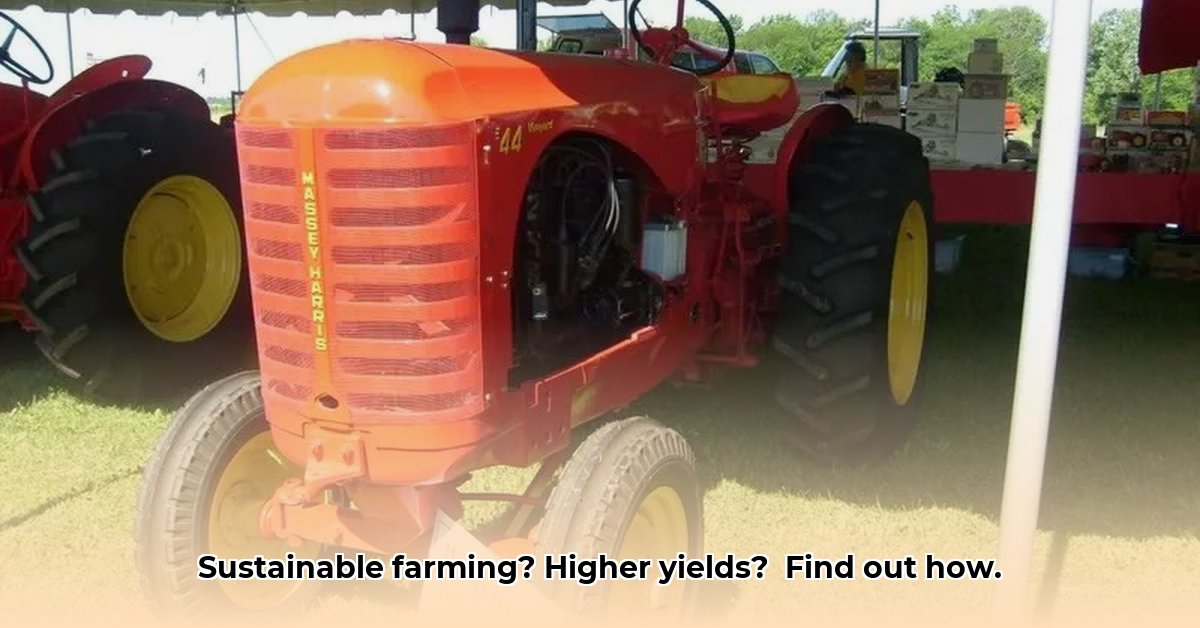
This year's Adrian Tractor Show transcended the typical agricultural exposition, emerging as a dynamic hub of innovation attracting an unexpectedly large crowd. Farmers, industry leaders, and technology enthusiasts converged to witness the latest advancements in sustainable farming technologies – a compelling indicator that environmentally conscious practices are no longer a niche market but a mainstream movement. Exhibitors showcased cutting-edge tools and techniques promising enhanced harvests with a reduced environmental impact. Let's delve into the key highlights that distinguished this year's event. For smaller farms considering new equipment, check out this helpful guide.
Precision Farming: A High-Tech Revolution in Agriculture
Precision farming technology undoubtedly stole the show, offering a level of agricultural precision akin to brain surgery. Center stage featured GPS-guided tractors capable of autonomous operation, intelligent sensors monitoring soil conditions in real-time, and robotic machinery streamlining labor-intensive tasks. These tools enable farmers to optimize resource allocation—water, fertilizers, and pesticides—focusing precisely on areas requiring attention. This targeted approach translates to minimized waste, reduced costs, and ultimately, healthier, higher yields. But is the initial investment justified? Return on investment (ROI) remains a critical consideration, varying significantly based on farm size and farming techniques. Smaller farms might face greater challenges during the transition, while larger operations could anticipate faster returns.
Key Advantages of Precision Farming:
- Increased Efficiency: Reduce resource consumption (water, fertilizer, pesticides).
- Improved Yields: Higher crop quality and quantity due to optimized resource use.
- Reduced Labor Costs: Automation handles labor-intensive tasks.
Key Challenges of Precision Farming:
- High Initial Investment: The technology is expensive and requires financing planning.
- Technological Expertise Required: Operators need training to work efficiently with the new technology.
- Data Management and Analysis: Requires effective software and tools to manage the large amounts produced.
How can we accurately assess the ROI of such investments? Let's explore strategies for determining the true value. One critical factor is the total cost of ownership, including not only the initial investment but also ongoing maintenance, repairs, and potential software updates.
Regenerative Agriculture: Harmonizing Farming with Nature's Rhythms
The show also highlighted the burgeoning popularity of regenerative agriculture, a set of practices that prioritize soil health. This approach focuses on improving the inherent capabilities of the land itself, resulting in substantial benefits. Techniques such as no-till farming, cover cropping, and crop rotation were prominently featured, demonstrating how to work with nature to enhance soil resilience and fertility.
These methods not only boost soil health but also contribute to carbon sequestration (combating climate change) and increase biodiversity. Several exhibitors showcased specialized equipment designed to simplify the adoption of these practices, rendering them accessible to farmers of all scales. The advantages extend beyond yield increases; healthier soil translates to a healthier planet. Wouldn't it be beneficial to adopt practices that improve our ecosystems simultaneously increasing yields? The answer is a resounding yes.
Key Benefits of Regenerative Agriculture:
- Enhanced Soil Health: Improved soil structure, water retention, and nutrient cycling.
- Increased Carbon Sequestration: Helps mitigate climate change by capturing atmospheric carbon dioxide.
- Enhanced Biodiversity: Creates a more diverse and resilient ecosystem.
Vertical Farming: Revolutionizing Urban Agriculture and Food Security
The Adrian Tractor Show also showcased vertical farming, a technique involving the cultivation of crops in vertically stacked layers indoors. This innovative approach offers a potential solution for food production in urban environments and areas with limited arable land, allowing the production of fresh produce even in locations where traditional farmland is scarce.
While vertical farming holds immense promise for urban food security, challenges persist. High energy consumption remains a barrier, as does the substantial initial setup cost. However, ongoing research is focused on developing more energy-efficient vertical farms, potentially leveraging renewable energy sources such as solar and wind. Is it possible that vertical farms might someday supply a major portion of the produce needed in densely populated areas? This innovative approach will likely play a significant role in the future of food production.
Practical Steps for Farmers: Embracing Sustainable Practices
The Adrian Tractor Show provided actionable steps for farmers seeking to integrate sustainable practices into their operations:
- Comprehensive Farm Assessment: Evaluate current methods, identify strengths and weaknesses, and pinpoint areas for resource optimization.
- Thorough Exploration of Options: Research different sustainable technologies and methods, selecting those most suited to your specific context.
- Strategic Implementation: Begin with small-scale implementation to test and adapt before full-scale commitment.
- Comprehensive Tracking of Results: Maintain detailed records of yields, resource use, and soil health to evaluate effectiveness.
- Collaboration and Knowledge Sharing: Network with fellow farmers to share experiences and accelerate the adoption of sustainable practices.
The Adrian Tractor Show convincingly demonstrated that sustainable agriculture isn’t a distant aspiration but a pragmatic approach offering substantial advantages. By embracing innovation and adopting appropriate methods, farmers can enhance yields while contributing to environmental sustainability, ensuring a productive and responsible future for generations to come.